


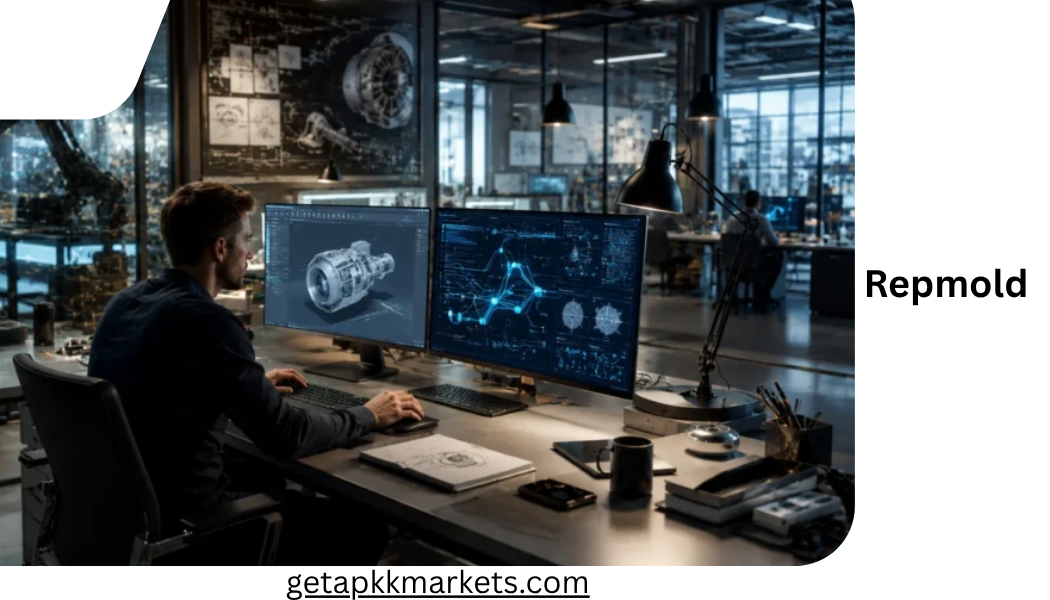
Manufacturing has changed more in the last decade than in the previous fifty years. Companies no longer have months to design, test, and launch a product. Customers expect better quality, faster delivery, and lower prices. To meet these demands, manufacturers are using smarter technologies that reduce waste while increasing production speed.
One term that has started gaining attention in advanced manufacturing discussions is repmold.
Although the meaning of repmold may vary depending on the industry or platform using the term, it generally describes a digital-driven molding and replication process that combines modern design software, rapid prototyping, precision engineering, and advanced manufacturing methods. The purpose is simple: create molds faster, improve product quality, and reduce production costs.
Instead of relying only on traditional mold-making techniques, repmold focuses on digital workflows that allow engineers to design, simulate, test, improve, and manufacture molds with greater speed and accuracy. This approach is especially valuable for companies that need quick product development without sacrificing quality.
As industries continue adopting automation, artificial intelligence, cloud computing, and additive manufacturing, repmold is becoming more important in product development. Manufacturers are finding new ways to shorten production cycles while maintaining consistent product performance.
This guide explains everything you need to know about repmold, including how it works, its benefits, applications, technologies, challenges, future trends, and why many experts believe digital molding is becoming the future of manufacturing.
What Is Repmold?
Repmold is a modern manufacturing concept centered on digitally controlled molding and replication processes. It combines computer-based design with rapid production techniques to help manufacturers create molds, prototypes, and finished components efficiently.
Unlike conventional mold-making, which often requires multiple manual steps and lengthy production schedules, repmold emphasizes automation, simulation, digital engineering, and continuous optimization.
The process typically includes:
- Digital product design
- Computer-aided engineering
- Virtual mold simulation
- Prototype production
- Mold optimization
- Precision manufacturing
- Product quality inspection
- Continuous design improvement
By integrating these stages into one connected workflow, repmold allows businesses to move from an idea to production much faster than traditional manufacturing methods.
Understanding the Meaning Behind Repmold
The word “repmold” can be understood as combining two important manufacturing ideas:
- Replication
- Molding
Replication focuses on producing identical parts with consistent quality.
Molding refers to shaping materials into finished products using specialized molds.
Together, these concepts represent a manufacturing system that prioritizes speed, repeatability, precision, and digital control throughout the production process.
Rather than treating mold creation as a one-time manufacturing step, repmold views it as an evolving digital process that can be continuously improved using engineering data.
Why Repmold Matters in Modern Manufacturing
Today’s manufacturers face several major challenges.
Customers expect customized products.
Competition is increasing worldwide.
Product life cycles are becoming shorter.
Production costs continue rising.
Businesses cannot afford long development times.
Repmold addresses these problems by creating a faster and more flexible production environment.
Instead of waiting weeks to test a new mold, engineers can simulate performance digitally before manufacturing even begins.
This reduces expensive mistakes while improving product quality.
Some of the biggest advantages include:
- Faster product development
- Lower manufacturing costs
- Better design accuracy
- Reduced material waste
- Improved quality control
- Easier customization
- Greater production flexibility
- Shorter time-to-market
These benefits explain why digital manufacturing strategies similar to repmold are becoming increasingly valuable across multiple industries.
How Repmold Works
Although every company follows its own manufacturing workflow, the general repmold process follows several important stages.
Step 1: Product Design
Everything begins with a digital product model.
Engineers use Computer-Aided Design (CAD) software to create a detailed three-dimensional model of the product.
Every measurement, angle, curve, and feature is carefully designed before manufacturing starts.
Digital models make it much easier to modify products without rebuilding physical prototypes.
Step 2: Engineering Analysis
Once the design is complete, engineers evaluate its performance.
This includes checking:
- Material strength
- Structural integrity
- Heat resistance
- Stress distribution
- Product durability
- Manufacturing feasibility
Advanced simulation software helps identify potential problems before production begins.
This saves both time and money.
Step 3: Mold Design
The next step focuses on creating the mold itself.
Engineers design molds that can produce identical parts repeatedly while maintaining tight quality standards.
Modern mold design considers factors such as:
- Material flow
- Cooling efficiency
- Injection points
- Air vent placement
- Surface finish
- Product shrinkage
Digital simulation helps optimize every detail before machining starts.
Step 4: Prototype Production
Instead of immediately manufacturing expensive production molds, companies often build prototypes first.
Rapid prototyping technologies make this process much faster than traditional methods.
Common prototype technologies include:
- 3D printing
- CNC machining
- Resin printing
- Polymer modeling
These prototypes allow engineers to test designs before mass production.
Step 5: Mold Manufacturing
After testing is complete, the production mold is manufactured.
Depending on project requirements, manufacturers may use:
- CNC milling
- Electrical discharge machining
- Laser machining
- Precision grinding
- Hybrid manufacturing systems
Digital instructions improve machining accuracy while reducing human error.
Step 6: Production Testing
Before full-scale manufacturing begins, trial production runs are completed.
Engineers inspect every component for:
- Dimensional accuracy
- Surface quality
- Material consistency
- Assembly performance
- Product durability
If improvements are needed, digital modifications can be made quickly.
Step 7: Continuous Improvement
One of the biggest strengths of repmold is ongoing optimization.
Manufacturing data collected during production helps engineers improve:
- Cycle time
- Product quality
- Material efficiency
- Equipment performance
- Mold lifespan
Instead of remaining fixed, the manufacturing process continuously evolves.
Core Technologies Behind Repmold
Repmold depends on several advanced technologies working together.
Each technology contributes to faster, smarter manufacturing.
Computer-Aided Design (CAD)
CAD software creates highly accurate digital product models.
Benefits include:
- Faster design changes
- Better visualization
- Improved collaboration
- Higher precision
- Reduced design errors
Digital modeling serves as the foundation for every later manufacturing stage.
Computer-Aided Manufacturing (CAM)
CAM software converts engineering designs into machine instructions.
Benefits include:
- Automated machining
- Better accuracy
- Faster production
- Reduced manual programming
- Higher consistency
CAM helps bridge the gap between digital engineering and physical manufacturing.
Computer-Aided Engineering (CAE)
CAE software performs engineering simulations before production begins.
Engineers can predict:
- Stress
- Heat flow
- Material deformation
- Structural behavior
- Product lifespan
Finding problems early significantly reduces production costs.
Rapid Prototyping
Rapid prototyping allows manufacturers to test products before creating production molds.
Advantages include:
- Faster development
- Lower costs
- Better customer feedback
- Easier design improvements
- Reduced manufacturing risk
Prototype testing has become an essential part of modern product development.
Automation
Automation reduces dependence on manual labor while improving consistency.
Examples include:
- Robotic material handling
- Automated machining
- Inspection systems
- Smart production monitoring
- Digital quality control
Automation increases productivity while minimizing production errors.
Artificial Intelligence
Artificial intelligence is becoming increasingly important within digital manufacturing.
AI systems can:
- Predict equipment failures
- Improve mold designs
- Optimize production schedules
- Detect quality defects
- Analyze manufacturing data
These capabilities make production more efficient over time.
Key Features of Repmold
Several characteristics distinguish repmold from traditional manufacturing methods.
Digital First Approach
Every manufacturing stage begins with digital engineering.
Instead of relying primarily on physical testing, virtual simulations guide decision-making.
Fast Product Development
Traditional mold development may require several months.
Digital workflows can dramatically reduce development time.
Companies launch products faster while remaining competitive.
High Precision
Computer-controlled manufacturing improves dimensional accuracy.
Even complex geometries can be produced with exceptional consistency.
Flexible Manufacturing
Manufacturers can quickly modify digital models without redesigning the entire production process.
This flexibility supports product customization.
Improved Collaboration
Designers, engineers, suppliers, and manufacturers can share digital files instantly.
Cloud-based collaboration reduces communication delays.
Data-Driven Decisions
Every production cycle generates valuable manufacturing data.
Engineers use this information to improve future production runs continuously.
Major Benefits of Repmold
Organizations adopting repmold often experience improvements across nearly every stage of manufacturing.
Shorter Development Time
Digital engineering reduces repetitive manual work.
Teams move from concept to production much faster.
Lower Production Costs
Better planning helps eliminate expensive manufacturing mistakes.
Reduced waste lowers overall operating costs.
Better Product Quality
Digital inspections improve manufacturing consistency.
Customers receive products with fewer defects.
Reduced Material Waste
Optimized production uses only the materials necessary for manufacturing.
Waste reduction also supports environmental sustainability.
Higher Productivity
Automation allows factories to produce more products in less time.
Machines operate continuously with minimal interruption.
Improved Customer Satisfaction
Faster production, better quality, and increased customization help businesses meet changing customer expectations.
Industries That Can Benefit from Repmold
One reason repmold is attracting attention is its flexibility. The same digital-driven molding approach can be adapted to many industries, allowing manufacturers to improve efficiency while maintaining consistent quality.
Some of the industries that benefit the most include:
Automotive Manufacturing
Automotive companies rely on precision parts that must meet strict quality standards. Repmold helps manufacturers create accurate molds for components such as dashboards, interior panels, lighting housings, engine covers, and plastic trim pieces.
Digital simulations also reduce design errors before expensive tooling begins.
Medical Device Production
Medical products require extremely high accuracy and repeatability. Repmold supports the production of medical housings, laboratory equipment, surgical tools, and diagnostic device components while helping manufacturers maintain consistent dimensions and reliable performance.
Consumer Electronics
Electronics companies often introduce new products every year. Faster mold development allows manufacturers to respond quickly to market demand while producing high-quality cases, connectors, buttons, and other precision parts.
Packaging Industry
Packaging manufacturers can use repmold to develop custom molds for bottles, containers, caps, trays, and protective packaging. The digital workflow makes it easier to test different designs before full production.
Industrial Equipment
Factories producing machinery and industrial components can improve production speed while reducing manufacturing waste through digitally optimized mold design.
Aerospace Applications
Although aerospace manufacturing requires strict certification standards, digital molding processes help engineers create lightweight, complex components with improved design accuracy.
How Repmold Supports Digital Transformation in Manufacturing
Digital transformation is changing how manufacturers operate. Instead of relying only on manual processes, companies now use connected systems that share information across every stage of production. Repmold fits naturally into this new approach because it combines digital design, automated manufacturing, and real-time data analysis into one workflow.
With repmold, engineers can track projects from the first design sketch to the final product. Every update is stored digitally, making it easier for teams to work together even if they are in different locations.
Some of the biggest ways repmold supports digital transformation include:
- Faster communication between design and production teams
- Better project management through digital records
- Reduced paperwork
- Easier product updates
- Improved manufacturing visibility
- Higher production accuracy
- Better customer response times
As more manufacturers adopt Industry 4.0 technologies, digital molding processes like repmold will continue becoming a standard part of modern production.
The Role of Repmold in Rapid Product Development
One of the biggest challenges manufacturers face is launching products quickly. Customers expect new products more often, and businesses must respond without lowering quality.
Repmold helps reduce product development time by allowing engineers to test ideas digitally before creating physical molds.
Instead of waiting weeks for a prototype, engineers can evaluate virtual models, identify design problems, and make improvements in just a few days.
This faster development cycle offers several benefits:
- Products reach the market sooner.
- Companies reduce research and development costs.
- Teams can test multiple design ideas.
- Customer feedback can be included earlier.
- Manufacturing risks are reduced.
For businesses operating in competitive industries, these advantages can make a significant difference.
Materials Commonly Used in Repmold Processes
A wide range of materials can be used depending on the product being manufactured.
Engineering Plastics
Engineering plastics are popular because they are lightweight, durable, and cost-effective.
Examples include:
- ABS
- Polycarbonate
- Nylon
- Polypropylene
- Polyethylene
These materials are commonly used in automotive, electronics, and consumer products.
Metal Alloys
Some molds and finished components require metals for higher strength and durability.
Common choices include:
- Aluminum
- Steel
- Stainless steel
- Titanium alloys
Metal molds are especially useful for high-volume manufacturing.
Composite Materials
Composite materials combine strength with low weight.
Industries such as aerospace and transportation often use composites to improve product performance while reducing overall weight.
Specialty Resins
Advanced resins are widely used during rapid prototyping because they provide excellent detail and smooth surface finishes.
Also read:Adultsrach: A Complete Guide to Features, Privacy, Safety, and What Users Should Know
Quality Control in Repmold Manufacturing
Quality control is essential in every manufacturing process, and repmold places a strong emphasis on maintaining consistent results.
Rather than waiting until production is complete, quality checks occur throughout the entire workflow.
Common inspection methods include:
Digital Measurement
Laser scanners and coordinate measuring machines compare finished parts with the original CAD model.
Surface Inspection
Advanced imaging systems identify scratches, dents, and other surface defects.
Dimensional Verification
Critical dimensions are measured to ensure every product meets engineering specifications.
Material Testing
Manufacturers test materials for:
- Strength
- Hardness
- Flexibility
- Heat resistance
- Chemical resistance
Functional Testing
Finished products are tested under real operating conditions to verify proper performance before shipment.
Environmental Benefits of Repmold
Sustainability has become an important goal for manufacturers around the world.
Because repmold uses digital planning and optimized production methods, it can help reduce environmental impact in several ways.
Less Material Waste
Accurate simulations reduce production mistakes, meaning fewer defective products are discarded.
Lower Energy Consumption
Optimized manufacturing cycles often require less machine operating time, reducing electricity usage.
Longer Mold Life
Well-designed molds last longer and require fewer replacements, reducing material consumption over time.
Reduced Transportation
Digital collaboration allows engineers to review designs online instead of shipping multiple physical prototypes between locations.
Support for Sustainable Manufacturing
Many companies now combine repmold with recycled materials, energy-efficient equipment, and environmentally responsible production practices.
Challenges of Implementing Repmold
Although repmold offers many advantages, implementation requires careful planning.
Initial Investment
Modern software, equipment, and automation systems require a significant upfront investment.
However, many businesses recover these costs through higher productivity and lower operating expenses.
Employee Training
Workers must learn new software, digital design tools, and automated production systems.
Continuous training helps organizations maximize the value of their investment.
Technology Integration
Older manufacturing equipment may not easily connect with modern digital systems.
Companies often need gradual upgrades to achieve full integration.
Cybersecurity
Because manufacturing data is stored digitally, protecting sensitive information becomes increasingly important.
Strong cybersecurity practices help prevent unauthorized access and data loss.
Managing Change
Moving from traditional manufacturing to digital workflows may require changes in company culture and daily operations.
Clear communication and employee involvement make this transition smoother.
Best Practices for Successful Repmold Adoption
Organizations considering repmold can improve their results by following several practical strategies.
- Start with clearly defined project goals.
- Invest in reliable CAD and simulation software.
- Train employees regularly.
- Use high-quality materials.
- Test prototypes before mass production.
- Monitor production data continuously.
- Perform preventive equipment maintenance.
- Encourage collaboration between design and manufacturing teams.
- Review production performance after every project.
- Continue improving processes based on real production data.
Following these practices helps companies gain the greatest value from digital manufacturing.
Future Trends for Repmold
Technology continues to evolve rapidly, and repmold is expected to benefit from several emerging innovations.
Artificial Intelligence
AI will become even more effective at optimizing mold designs, predicting maintenance needs, and identifying production defects automatically.
Digital Twins
Digital twins create virtual copies of manufacturing systems that update in real time.
This allows engineers to monitor production, test improvements, and solve problems before they affect physical equipment.
Smart Factories
Factories are becoming more connected through sensors, robotics, and cloud computing.
Repmold fits naturally into these smart manufacturing environments by providing digital information that supports automated decision-making.
Advanced Additive Manufacturing
As industrial 3D printing continues improving, manufacturers may produce complex molds faster and with greater design flexibility.
Cloud-Based Collaboration
Cloud platforms will make it even easier for global engineering teams to collaborate on mold design, production planning, and quality management.
More Sustainable Manufacturing
Future repmold systems are likely to focus on reducing carbon emissions, improving energy efficiency, and increasing the use of recyclable materials.
Why Repmold Is Becoming More Important
Manufacturing is becoming faster, smarter, and more competitive every year. Companies that rely only on traditional production methods may struggle to keep up with changing customer expectations.
Repmold offers a practical solution by combining digital engineering with efficient manufacturing practices. It allows businesses to develop products more quickly, improve consistency, reduce waste, and respond faster to market demands.
Whether a company produces automotive parts, consumer electronics, medical devices, or industrial equipment, digital molding strategies provide opportunities to improve both productivity and product quality.
As technologies such as artificial intelligence, cloud computing, robotics, and smart factories continue advancing, repmold is likely to play an even greater role in the future of manufacturing.
Conclusion
Repmold represents more than a modern molding technique. It reflects a broader shift toward intelligent, data-driven manufacturing where digital design, simulation, automation, and continuous improvement work together to create better products.
By reducing development time, improving accuracy, lowering production costs, and supporting sustainable manufacturing, repmold helps organizations stay competitive in a rapidly changing global market.
Although adopting digital manufacturing requires investment in technology and employee training, the long-term benefits often outweigh the initial challenges. Businesses that embrace these innovations are better prepared to deliver high-quality products while adapting quickly to customer needs.
As manufacturing continues evolving, repmold is expected to become an increasingly valuable approach for companies seeking faster innovation, greater efficiency, and long-term growth.
Frequently Asked Questions About Repmold
What makes repmold different from traditional mold manufacturing?
Repmold focuses on digital design, virtual testing, automation, and continuous process improvement, while traditional mold manufacturing relies more heavily on manual engineering and physical testing.
Can small businesses use repmold?
Yes. Small manufacturers can adopt repmold gradually by starting with digital design software, rapid prototyping, and modern production planning before investing in larger automation systems.
Does repmold replace skilled engineers?
No. Repmold supports engineers by providing better tools and data. Skilled professionals remain essential for design decisions, quality control, and production planning.
Is repmold only useful for large factories?
No. Companies of different sizes can benefit from faster design cycles, improved quality, and more efficient manufacturing processes.
Can repmold improve custom manufacturing projects?
Yes. Because designs are stored digitally, manufacturers can quickly modify products to meet specific customer requirements without rebuilding the entire production process.